
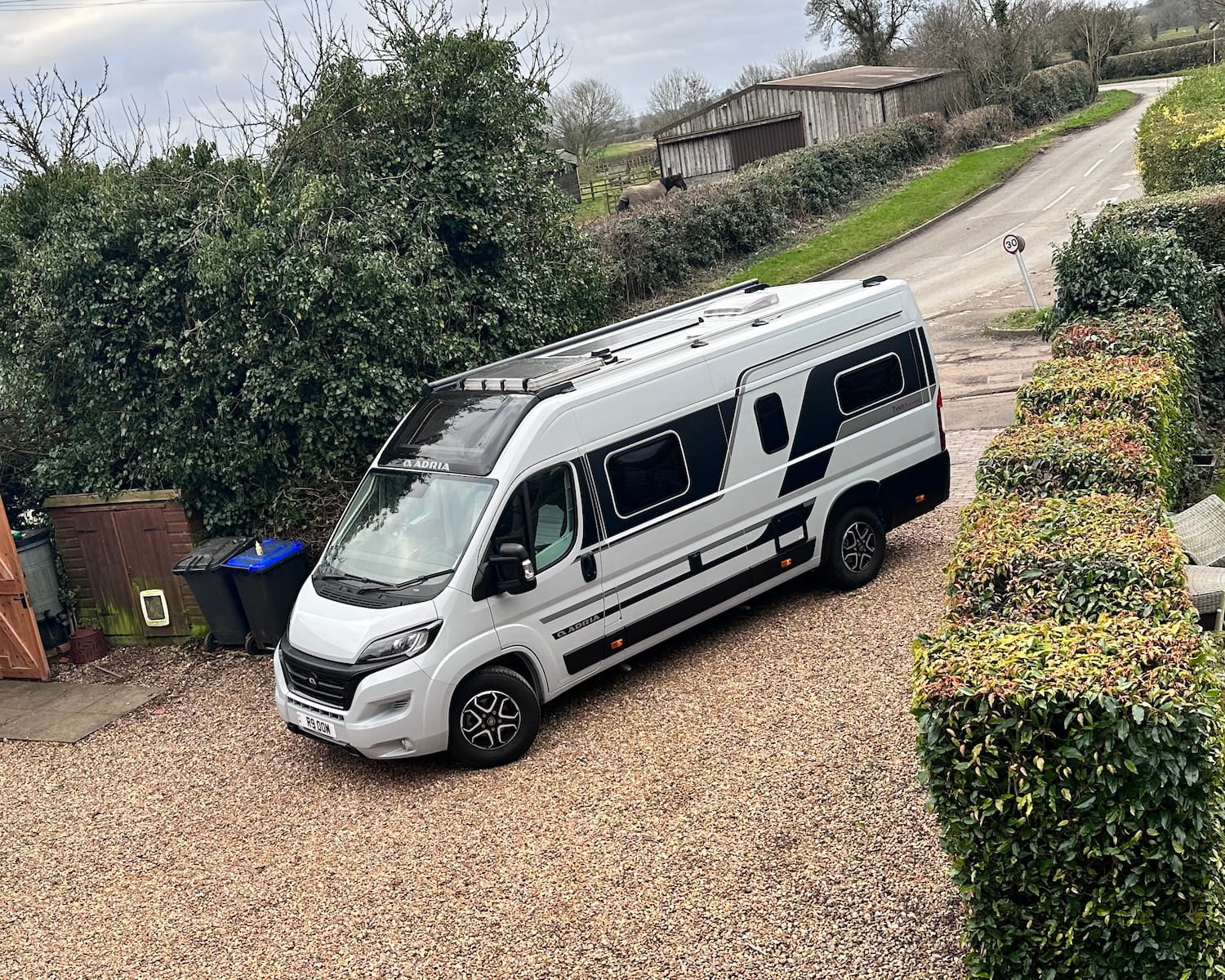
I’m looking at entering the UK campervan conversion market. Not as a converter, as the infrastructure that helps converters stop turning away business.
The market’s growing. Motorhome registrations jumped 20.2% in 2024. The UK market sits at £1.5 billion with 8% annual growth forecast.
But here’s what caught my attention: a lot of converters keep pausing order books.
Not because demand dried up. Because their infrastructure & systems can’t handle it.
The Signal in the Pause
When a business stops taking orders during a growth phase, that’s not a marketing problem. That’s a systems problem.
I’ve spent three years building automation and workflow infrastructure for UK businesses. I recognise the pattern. Demand exceeds capacity, but capacity isn’t constrained by physical resources, it’s constrained by manual processes that don’t scale.
Converters are pausing orders because something in their workflow creates a bottleneck. My hypothesis: the quoting process.
Where I Think the Friction Lives
Professional conversions often run anywhere between £25,000 to £80,000. Every quote requires margin verification against fluctuating supplier pricing.
When supplier costs shift, someone manually checks whether the quote still protects margin. That verification happens per enquiry. Enquiries stack up whilst someone’s verifying yesterday’s quote.
The workflow looks like this:
Enquiry arrives → Check current supplier pricing → Calculate margin → Generate quote → Send to customer
Manual at every step.
Now multiply that across dozens of enquiries. Add the reality that some converters are fully booked into 2027, and you see the constraint.
The Knock-On Effect
Margin verification delays don’t just slow quoting. They create downstream problems:
- Enquiries sit unanswered whilst quotes are being verified
- Customers wait longer for responses
- Conversion rates drop because response time matters
- Staff interrupt each other to confirm pricing details
- The business pauses orders rather than risk margin erosion
This is expensive friction. Measurably expensive.
The Standardisation Prerequisite
Automation doesn’t fix chaos. It accelerates it.
Before you can automate quoting, you need standardised offerings. Too many variables and automation becomes error-prone. The system can’t handle infinite customisation.
Small converter teams avoid standardisation because communication feels easy. When everyone’s in the same workshop, you just ask. No documentation required.
But that creates constant interruptions. Every question breaks someone’s workflow. The cumulative cost is invisible until you measure it.
Standardisation isn’t about limiting customer choice. It’s about creating the foundation that lets automation work.
Once offerings are standardised, quoting becomes systematic. Supplier pricing feeds into the system. Margins calculate automatically. Quotes generate without manual verification.
The business stops pausing orders because infrastructure can handle demand.
What the Waiting Lists Reveal
Jorvik Van Conversions: fully booked for 2026, waiting list extends to 2027.
During the pandemic, their usual eight-week waiting times doubled to 16 weeks. They expected it to hit 24 weeks.
That’s not a capacity problem in the traditional sense. According to Leisure Drive, every conversion requires minimum 168 hours of skilled labour. The constraint isn’t workshop space, it’s workflow efficiency.
Cosmic Campervans positioned themselves around speed: conversions completed in under four weeks. They’re marketing against the industry’s delivery bottleneck.
Speed as differentiation only works when competitors can’t match it. And competitors can’t match it because their workflows aren’t built to scale.
The Labour Shortage Amplifies Everything
Skilled converter labour is scarce. Finding qualified technicians limits capacity across the industry.
But here’s the systems view: if your existing team spends time on manual quoting, supplier coordination, and margin verification, you’re wasting skilled labour on tasks that don’t require their expertise.
Automation doesn’t replace skilled work. It removes the busywork that prevents skilled workers from doing what they’re actually hired to do.
Supply Chain Dependencies Create Operational Bottlenecks
Fiat’s supply chain problems at the Sevel factory forced major converters to shift from Fiat Ducato to Ford Transit base vehicles. That’s a structural dependency creating operational disruption.
Supply chain volatility affects component availability and pricing. Solar panels, modular furniture, electrical systems, all subject to delays and price fluctuations.
Converters absorb that volatility manually. Someone tracks supplier pricing. Someone adjusts quotes. Someone communicates delays to customers.
All manual. All time-consuming. All preventable with proper infrastructure.
Digital Infrastructure Gaps
I haven’t audited converter websites yet. That work starts on Monday.
But I have an inkling of what I’ll find. Websites that function better as brochures, not conversion engines. Enquiry forms that dump into email. No automated follow-up. No lead nurturing. No system connecting enquiry to quote to booking.
The digital infrastructure treats each enquiry as a one-off event requiring manual handling. There’s no pipeline. No automation. No leverage.
That’s the gap I’m designed to close.
What Proper Infrastructure Looks Like
The conversion business needs three layers working together:
Foundation: Standardised offerings presented in a custom format to the customer, I’m talking an all singing all dancing online van configurator that supports the systematic pricing, whilst appearing to the customer as completely bespoke (which it is, in a way).
Automation: Supplier pricing updates are scheduled automatically into quoting system. Margin calculations run in the background. Enquiries route to the right workflow based on conversion type. Follow-up sequences run without manual intervention.
Optimisation: Conversion rate tracking on enquiry forms. A/B testing on quote presentation. Lead scoring to prioritise high-intent customers. Analytics showing where enquiries drop off.
Build → Automate → Optimise.
That sequence isn’t arbitrary. You can’t optimise what isn’t automated. You can’t automate what isn’t standardised.
The Reconnaissance Phase
I’m treating this week as market reconnaissance, not validation.
My hypotheses about quoting friction and standardisation gaps might be completely wrong. The real bottlenecks might live elsewhere in the workflow.
That’s why I’m starting with open questions:
- If you could change one thing about the business, what would it be?
- What’s the most frustrating or time-consuming part of the job?
- Where do enquiries currently drop off?
- How long does quote generation actually take?
I’m not selling solutions. I’m mapping the system.
Once I understand where time gets wasted, where manual processes create bottlenecks, where margin verification slows everything down, then I can architect infrastructure that eliminates those friction points.
What This Market Entry Actually Looks Like
I’m not entering as another converter. The market doesn’t need more people doing conversions.
I’m entering as the infrastructure provider that lets existing converters handle the demand they’re currently turning away.
The opportunity isn’t in competing for customers. It’s in building the systems that let converters stop pausing their order books.
Automation that handles quoting. Workflows that manage supplier coordination. Digital infrastructure that converts enquiries without manual handoffs.
The campervan conversion market is growing at 8% annually. Converters are booked into 2027. Demand exceeds infrastructure capacity.
That’s not a problem for converters to solve alone. That’s an infrastructure gap.
And infrastructure is what I build.
What Happens Next
Monday, I start conversations with conversion specialists. I’m testing whether my systems-focused view of their operational friction matches reality.
If the bottlenecks are where I think they are, quoting, standardisation, supplier coordination, then the solution is clear. Build the infrastructure that eliminates those bottlenecks.
If I’m wrong, the conversations will show me where the real friction lives.
Either way, I’m mapping the system before I architect the solution.
The UK campervan conversion market reveals its opportunities when you stop asking what customers want and start asking where infrastructure fails.
Paused order books during a growth phase aren’t a demand problem.
They’re a systems problem.
And systems problems have systematic solutions.