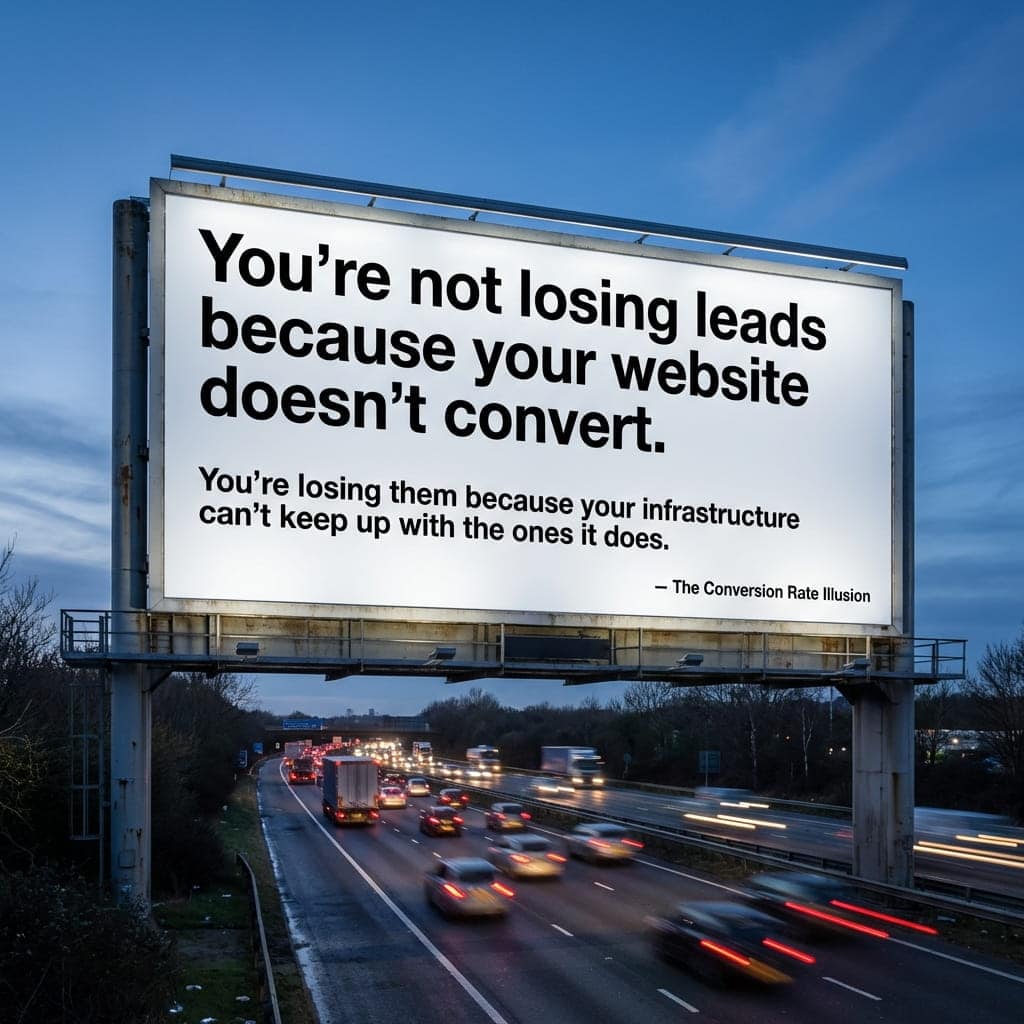


Most businesses spend weeks comparing marketing agency portfolios and pricing packages. They’re looking at the wrong things.
The agency with the best case studies might outsource the work you need. The one with the lowest prices might keep you paying monthly fees without delivering measurable results. The one promising guaranteed ROI might not even have access to track what matters.
Research shows that dissatisfaction with the value received is the top reason businesses switch agencies. Between 26% and 60% of marketers cite measuring ROI as their primary obstacle, often because their agency never set up proper tracking in the first place.
This guide shows you what to look for instead. The straightforward signs that separate agencies that deliver from agencies that just talk.
Check Their Services Page Before the First Call
An agency’s own website tells you everything about how they work.
Look at their services page. If it’s all “strategy planning” and “vision” with no mention of actual deliverables, they probably can’t build what they’re selling. If they talk about implementing tracking but don’t list web development or technical services, they’ll need to outsource it.
Here’s what that means for you: More time, more cost, more coordination. You become the middleman between the agency that plans and the developer who builds.
Marketing agencies regularly outsource technical work because they can’t write the code themselves. They’ll write a brief for Google Tag Manager implementation, then send it to a developer. You’re paying for two teams when you thought you hired one.
A detailed services page lists specific deliverables: web development, email marketing, conversion tracking, landing page design. If you see these listed as actual services rather than vague capabilities, the agency can execute what they propose.
Ask What Happens When Tracking Isn’t in Place
Most businesses come to an agency without proper tracking infrastructure. No conversion tracking, no clear view of customer behaviour, no reliable data on what’s actually working.
This is where you learn how an agency really operates.
The wrong answer: Promising specific ROI numbers or guaranteed results before they’ve seen your data. If a marketing agency commits to KPIs without knowing what you’re currently tracking, they’re guessing or planning to show you vanity metrics that look good but mean nothing.
The right answer: Explaining that realistic KPIs require a foundation first. You need three months of proper tracking data to establish a benchmark. During that time, you’re running campaigns and collecting data on customer behaviour and site performance.
It’s like trying to build a house on a concrete slab without knowing how deep the concrete is. You need to see what you’re working with before you can set real targets.
An agency that tells you this upfront is being transparent about what’s actually possible. An agency that promises immediate results without this foundation is setting you up for disappointment.
Look for Proposals That Show Exactly What You’re Getting
Vague proposals keep you paying without knowing what you’re paying for. This is the most common complaint businesses have about their previous agencies.
A proper proposal should be detailed enough that you know exactly what you’re getting and when. Not a one-page overview with broad service categories. A document that outlines specific deliverables, timelines, and how success gets measured.
What should be in there:
- Your business goals for 3, 6, and 12 months
- What “good” and “great” look like for your specific situation
- Several service level options at different price points
- Realistic KPIs with timeframes for each option
- What gets delivered and when
Research shows that 46% of agencies highlight clear visual representation of data as the top value to their clients. The proposal is where that clarity starts.
If you’re reading a proposal and still don’t know what you’ll actually receive, the agency either doesn’t know or doesn’t want to commit. Either way, you’ll end up in the same position as before: paying monthly fees without clear deliverables.
Test Whether They Can Build Everything They Suggest
Here’s a situation that happens constantly: A marketing agency suggests a campaign that needs custom landing pages. Or they recommend tracking implementation that requires custom code. Then they tell you they’ll need to bring in a developer.
You’re now coordinating between teams, waiting for handoffs, and paying for work that should have been included in the original scope.
Full-service agencies handle this differently. When they suggest something, they can build it. When they recommend tracking, they write the code. When they design a campaign, they create the landing pages.
This matters because employing multiple specialist agencies means more work for you. You act as the middleman managing them all, piecing together reports in different formats measuring different things.
Ask directly: “If you recommend something we need built, can you build it, or do we need to hire someone else?”
The answer tells you whether you’re hiring an execution partner or a coordination project.
Find Out What Happens When You Can’t Execute a Task
Some agencies offer consultancy packages where they provide strategy and task lists, but you handle the execution. This works if you have the skills and time. It doesn’t work when they give you tasks you can’t actually do.
Writing custom JavaScript for conversion tracking? Building landing pages optimised for conversions? Most business owners don’t have these skills, and the learning curve is too high when you’re trying to run a business.
The question to ask: “If you give me a task I can’t do myself, what happens?”
A good marketing agency has an answer. They offer implementation at a discount for existing clients. They can execute everything they suggest. You’re not stuck with a strategy you can’t use.
You should be able to take good tracking data and trend audits and create blog content or social posts. You shouldn’t need to write code or design conversion-focused pages. There’s a clear line between what you can reasonably handle and what needs technical expertise.
Check How They Report Results
Generic reports are useless. An e-commerce business needs to see how many email click-throughs converted to purchases. A finance company needs to track calls from specific ad campaigns. A B2B service provider needs to see form submissions and consultation bookings.
Your report should show data that matters to your business model, not standard metrics that look impressive but don’t connect to revenue.
What to ask during onboarding: “What will you track, and how will you show it to me?”
The agency should ask what you want to see before they start reporting. They should tailor the report to your business type. They should give you access to the underlying data so you can verify the numbers yourself.
Research shows that 7 in 10 marketing agency leaders rate reporting as extremely important for retention. Yet many agencies fail this basic test, providing automated reports that don’t answer the questions you actually have.
If you ask for read-only access to your ad accounts or analytics and get a delay, a fee, or a refusal, that’s a signal on its own.
Ask What Else They Can Do When You Need It
Most businesses don’t know all their marketing needs upfront. You start with a website, then need email campaigns, then want to add conversion tracking, then realise you need landing pages for specific campaigns.
Each time you need something new, you’re either back to finding another specialist or hoping your current agency can handle it.
The question that reveals capability: “If we go for this package, what else can you do when the time comes?”
This shows you whether you’re hiring a single-service provider or a partner that can grow with your business. It shows whether they think about your overall business goals or just the specific project you’re discussing.
A marketing agency built around your bottom line will connect everything back to business outcomes. They’ll care about overall growth, not just website traffic or social media engagement.
The businesses that choose agencies focused on measurable outcomes understand something important: They’re not buying services, they’re buying infrastructure that removes friction between where they are and where they want to be.
Verify Who Owns Your Accounts and Data
If your marketing agency owns your ad accounts, they control your historical data, audience lists, and tracking. When you switch agencies, you lose everything.
A case study shows the impact: When a retailer owned their accounts, switching agencies took only a few days. The new marketing agency kept all historical data and audience lists. Within one month, cost per acquisition fell by 18% whilst return on ad spend rose by 22%.
What to establish before signing:
- You own all ad accounts (Google, Meta, LinkedIn)
- You own your website and hosting
- You own your email lists and CRM data
- You get admin access to all platforms
- You keep everything if you switch agencies
A marketing agency that resists this arrangement is building dependency, not capability. They want switching costs high enough that you stay even when results disappoint.
Make the Decision Without Second-Guessing
You’ve asked the right questions. You’ve checked their services page, verified they can build what they propose, confirmed you’ll own your accounts, and seen a detailed proposal that shows exactly what you’re getting.
Now you need to decide.
The businesses that choose well understand this: They’re looking for an execution partner that can implement everything they suggest, report on what actually matters, and grow with them as needs change.
They’re not looking for the cheapest option or the most impressive portfolio. They’re looking for transparency, capability, and alignment on what success actually means.
On average, agencies retain clients for 2 to 5 years. The ones that last are the ones that deliver measurable results, communicate clearly, and build infrastructure that compounds over time.
You’re not buying a service. You’re buying a system that removes friction between where your business is now and where it needs to be.
Choose the marketing agency that can build that system, not just talk about it.